

You’ve written the last page. Now comes the question every author asks next: how long until this book is actually in someone’s hands?
There’s no single answer here, and anyone who gives you an exact date without seeing your manuscript is just guessing. But there is a realistic range, and knowing what happens at each stage helps you plan instead of sitting around wondering.
Here’s a stage by stage breakdown of how long self-publishing a book actually takes, along with what speeds things up and what slows them down.
The Short Answer
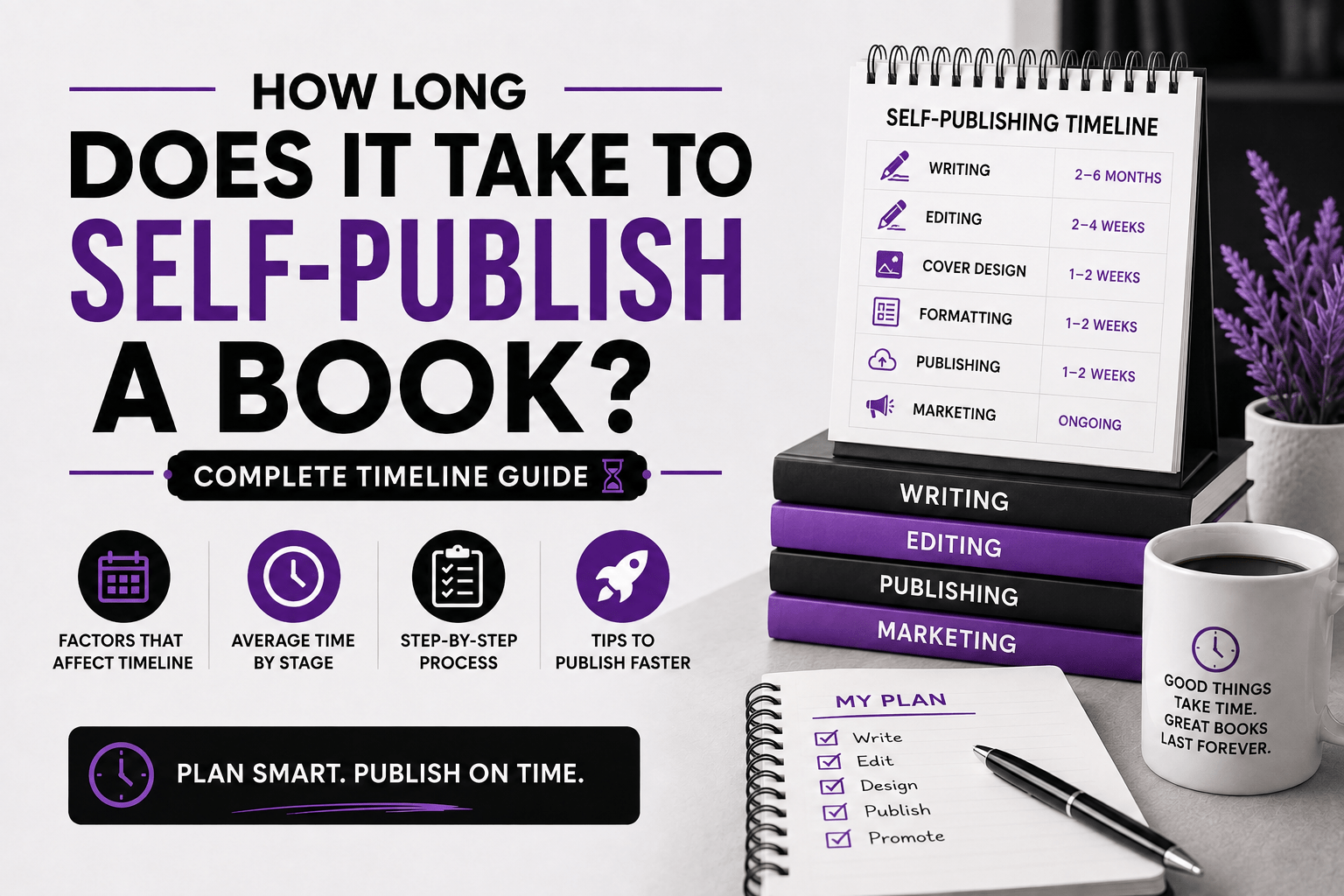
Most authors move from a finished manuscript to a published book in three to six months. Some finish faster if the manuscript only needs light editing. Others take closer to a year if they want a full rewrite, multiple rounds of edits, or a bigger marketing push before launch.
The timeline depends less on luck and more on how much work the manuscript needs and how involved you want to be at each step. A memoir that needs heavy restructuring will always take longer than a business book with a tight outline and a clean first draft.
Editing Takes the Most Time, and That’s a Good Thing
Editing is usually the longest stage, and rushing through it is the biggest mistake authors make. One full pass covering structure, pacing, grammar, and consistency can take four to eight weeks, depending on how long the manuscript is.
Most books need more than one round. A developmental edit comes first and fixes the bigger issues, like pacing problems or weak chapter transitions. A line edit follows and tightens the actual sentences, word by word. After that, a final proofread catches the typos and formatting slips that survive the earlier passes.
Skipping steps here to save time almost always shows up later, in the reviews. Readers notice sloppy editing fast, and once a few reviews mention it, sales tend to slow down no matter how strong the story underneath actually is.
Cover Design and Formatting Run in Parallel
While editing wraps up, cover design and interior formatting can happen at the same time. This usually takes two to four weeks, depending on how many revisions you want and whether you’re publishing in print, ebook, or both.
Print formatting needs more precision than ebook formatting. Margins, page breaks, and trim size all have to line up correctly before anything goes to print. A page that looks fine on screen can shift completely once it’s set for a 6×9 paperback trim, so this step deserves its own careful pass rather than a rushed once-over.
Cover design timelines shift depending on genre too. Fiction covers usually go through more concept rounds since mood and tone matter so much, while business or nonfiction covers tend to lock in faster once the core message is clear.
Getting Your Files Publish Ready
Once editing and design are locked, your files need final formatting for whichever platforms you’re using. This step is usually quick, about one to two weeks, though it can stretch longer if formatting issues show up on a specific device or platform.
This is also when ISBN registration, copyright filing, and metadata setup happen. None of these take long on their own, but skipping them or leaving them until the last minute causes delays right before launch. Metadata gets overlooked constantly, and weak keywords or a thin book description can quietly hurt discoverability for months after release.
Distribution setup is worth planning early too. Whether you’re going wide across multiple retailers or focusing on one platform, each choice comes with its own file requirements and lead times, and those are far easier to handle before launch week turns into a rush.
Marketing Prep Should Start Before Launch Day
A lot of authors wait until their book is live to start thinking about marketing. That’s a mistake. Building buzz, lining up reviewers, and putting together a launch strategy should start four to six weeks before release, not after.
Books with a plan in place before launch tend to see stronger first week sales, and that matters more than most authors realize, since early momentum affects how platforms recommend the book to new readers. Advance reader copies, early reviews, and a simple social media plan all take time to set up properly, so squeezing this into the final few days rarely works.

Choosing Between DIY and Full-Service Support
How long self-publishing takes also depends on how much you’re handling yourself versus handing off. Doing everything solo, from editing to formatting to cover design, gives you full control, but it usually adds months, especially if you’re learning each step for the first time.
Working with a full-service team compresses the timeline, since editing, design, and formatting run on a coordinated schedule instead of one task waiting on another. It also cuts down on the back and forth that happens when different freelancers aren’t talking to each other about deadlines.
What Slows Things Down
A few things stretch timelines past the usual range. Manuscripts that need heavy structural rework take longer to edit. Multiple rounds of cover revisions add weeks. Waiting too long between feedback rounds, or going back and forth on decisions, adds delays that have nothing to do with the actual work itself.
Setting a firm launch date early, even a rough one, helps keep everyone moving. Without a target, edits stretch on, design tweaks pile up, and marketing prep gets pushed back again and again until the book quietly slips another month.
The fastest path is a clear plan and a team that keeps things moving without you having to chase updates.
How The Apex Publishing Keeps Things on Track
At The Apex Publishing, we walk you through every stage with a clear timeline from day one, so you’re never guessing what happens next. Our self-publishing services cover editing, design, formatting, and launch prep under one roof, which cuts out the back and forth that slows most authors down.
If you want a realistic timeline based on your actual manuscript, talk to our team. We’ll map out what publishing your book actually looks like from here.